
Woodbury City Directory Holdings
Woodbury city directories are a set of leads, not one verified complete sequence. The City of Woodbury confirms that a locally produced current City Directory and phone book can be requested through Resident Information, but it does not publish an edition date or content description. Minnesota Historical Society has a telephone-directory finding aid with a Woodbury catalog heading. Washington County Historical Society, known as WCHS, supplies the deepest local index layer. Its resources can connect a name to deeds, biographies, cemeteries, school material, photographs, newspapers, and Woodbury books.
| Collection lead | Known coverage | Holding place | Access and use |
|---|---|---|---|
| Current Woodbury City Directory | Locally produced; edition date not published | City of Woodbury | Request through Resident Information |
| MNHS telephone directories | Woodbury catalog heading; finding-aid portion displays 2008-2011 material | Gale Family Library | Confirm exact shelf rows or request research |
| WCHS Name Index and files | More than 180,000 entries; source dates vary | WCHS Research Center | Name, family, place, and source leads |
| Park High alumni index | 1917-2009 | WCHS Name Index | Community and former-classmate context |
| Stillwater city directories | Selected runs from 1876-77 through 1930-31 | WCHS | Only with a documented Stillwater connection |
A verified listing is a dated publishing record, not a full household list. An old telephone address does not prove a present location. Note: Keep the volume year and original place name beside every result, because Woodbury and Washington County geography changed over time.
Current Woodbury City Directory Route
The city route is useful for a current directory request, but the public page does not state an issue year, a reverse section, or a complete coverage statement. Ask for the locally produced directory by name and retain the edition information supplied with it. R.H. Stafford Library is the local reference counter, but its public page does not identify a dedicated Woodbury directory shelf, a genealogy collection, or a reverse-directory run. Ask staff about interlibrary loan, licensed research access, local newspapers, yearbooks, and a Gale Family Library referral before assuming an item is present.
The Woodbury Resident Information page shows the current directory request route.
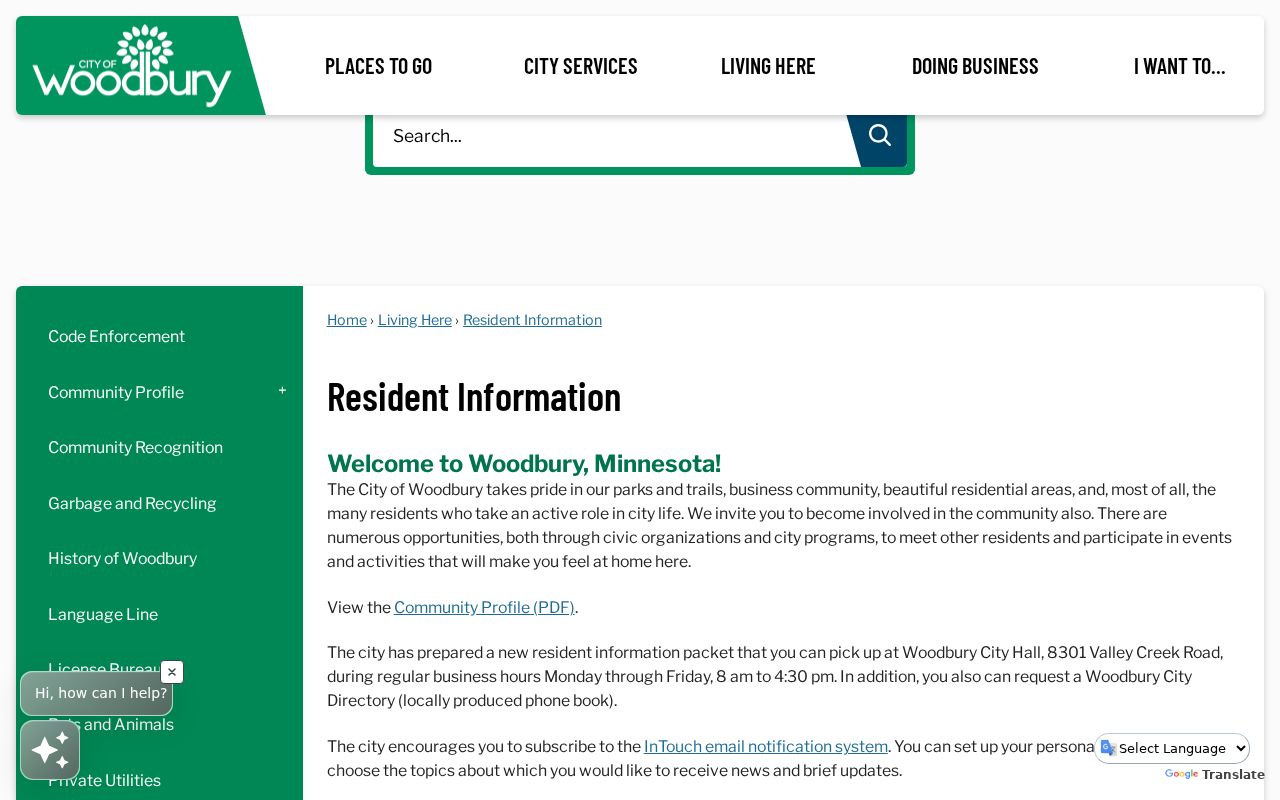
Use that city channel for the current item, then record exactly what issue or access condition the city confirms.
The R.H. Stafford Library location page identifies the local county-library reference location.

The library is a sound first stop for a shelf check or referral, not proof that a particular Woodbury volume is held there.
Woodbury City Directories at MNHS
The strongest documented historical directory lead is MNHS finding aid LB00113, a collection of telephone directories published by phone companies. It describes alphabetical residential and business white pages, street addresses, and subject-arranged yellow pages. Its catalog headings include Woodbury, Minnesota, and the visible part of the finding aid contains 2008-2011 material. That does not establish a complete Woodbury run or identify a specific Woodbury volume. The precise shelf rows and years need confirmation from the Gale Family Library.
The MNHS telephone-directory finding aid is the starting point for that confirmation.
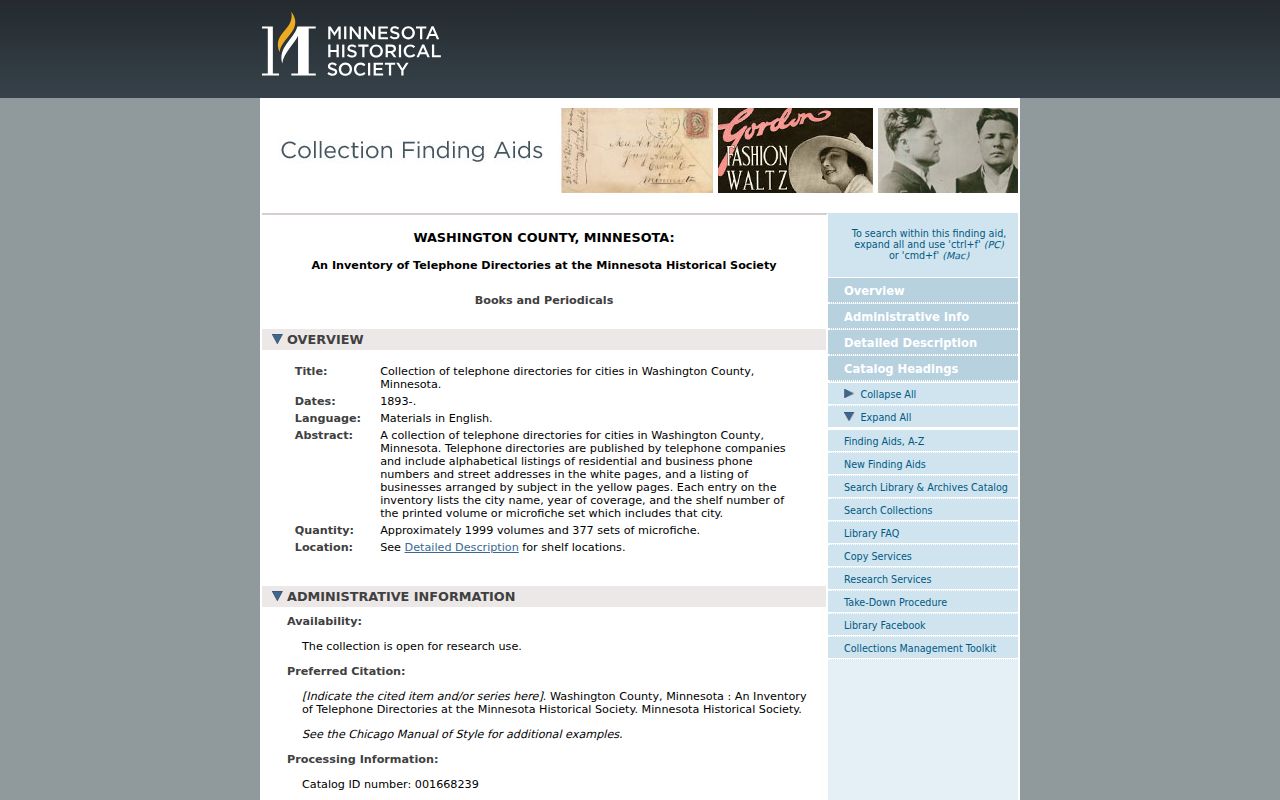
The screenshot documents collection-level information, not a live Woodbury listing or a verified reverse section.
MNHS also accepts city-directory and telephone-book research requests, and offers interlibrary loan for directories and county atlases through its Gale Family Library research service. Give staff a name variant, place, approximate date, and the type of entry needed. A focused request is more likely to identify the correct item.
Woodbury City Directory Clues at WCHS
WCHS is the local companion to a Woodbury city directory search. Its Goodman Research Center in Stillwater lists a Name Index with more than 180,000 entries, community and family folders, plats and atlases, local church and cemetery material, county deeds, biographical files, newspapers, and photographs. The center lists a $5 research fee for nonmembers, mail research at $25 per hour with the first hour paid in advance, and copies at 25 cents per page. Listed hours are Tuesday, Friday, and Sunday noon to 5:00, Wednesday 3:00 to 9:00, or by appointment.
The WCHS Research & Collections page describes the center and its local source types.
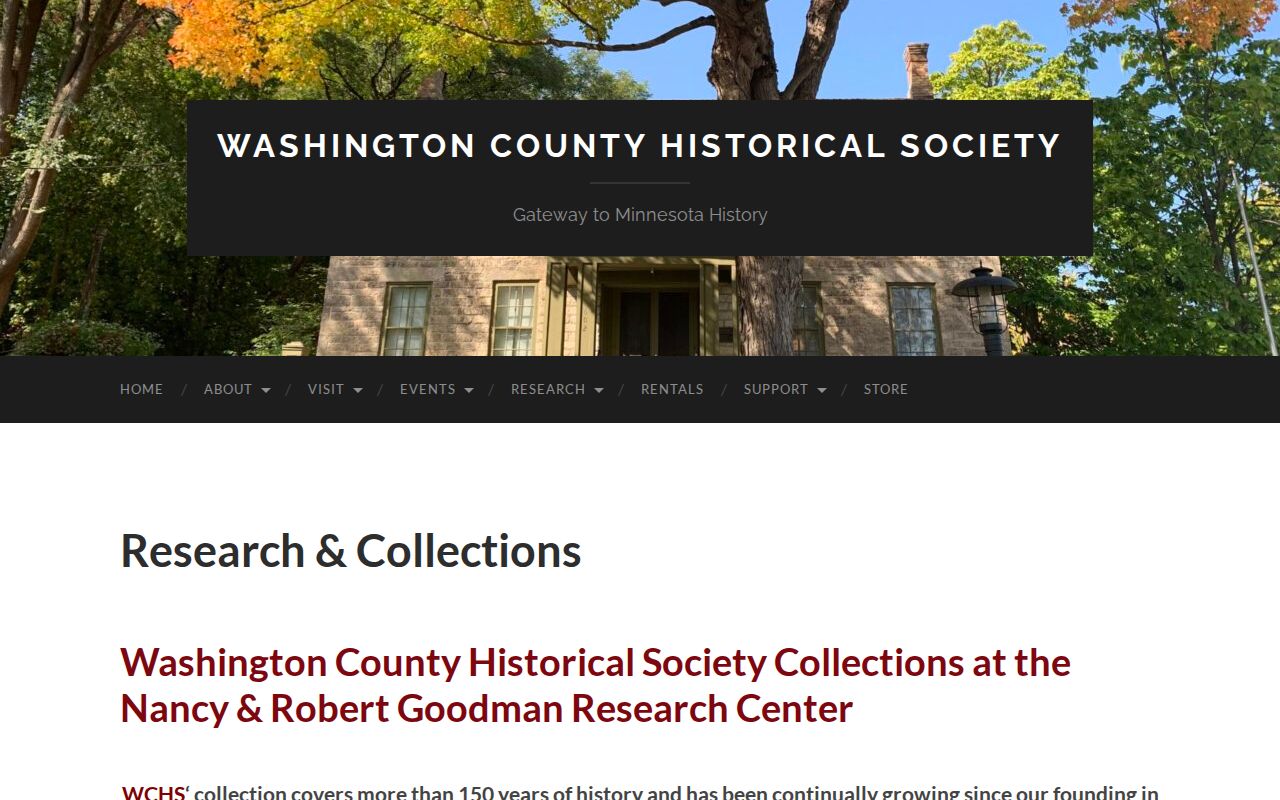
These holdings can supply an independent clue when a telephone book is missing, but they do not turn an index entry into proof of residence.
The online WCHS source list reports 247 Woodbury deed entries, 2,434 biographical-file entries, 2,414 photo entries, 1,295 school-scrapbook entries, and 19,466 Park High alumni entries. Those are index-entry counts, not counts of people living in Woodbury at one time.
The WCHS Name Index source list shows the available source categories.
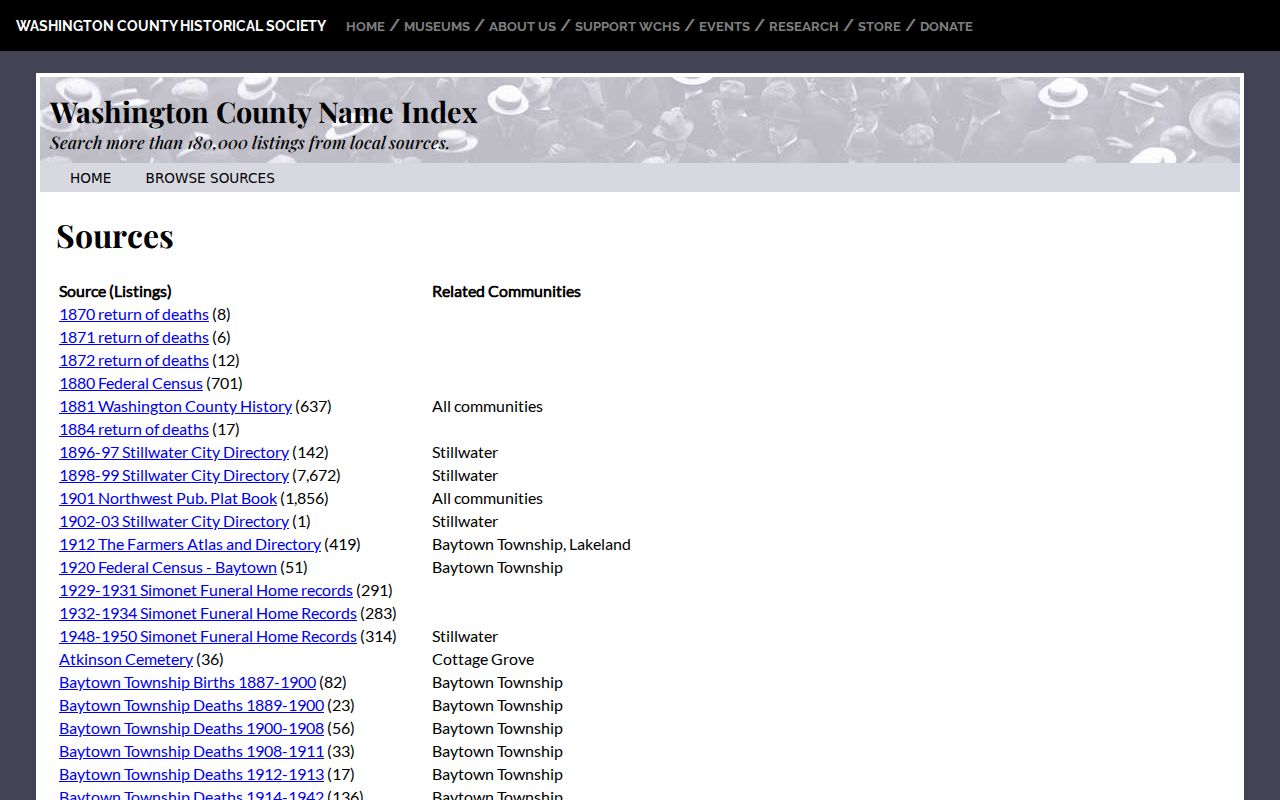
Use the source name and its date range to decide whether a lead belongs with a directory search, a cemetery check, or a newspaper request.
How a Woodbury City Directory Reads
No live Woodbury directory entry was inspected in the research. There is therefore no verified local example of a household notation, address abbreviation, printed descriptor, or reverse listing. Ask for a scan or a transcription of the exact page, volume, and year, then record only what that item prints. A collection finding aid can establish that a directory type exists. It cannot reveal the fields in a particular Woodbury entry.
| Printed item to capture | Why it matters |
|---|---|
| Name as printed | Preserves initials, spelling, and possible alternate forms |
| Street address and telephone | Creates a dated location clue, not a present-address claim |
| Other household notation | Can distinguish related names if the volume actually prints it |
| Occupation or business descriptor | Capture only if printed; none was observed in a Woodbury entry |
| Page, volume, year, and key | Lets another researcher verify the source |
| Reverse section | Confirm it exists before treating an address as an occupant index |
- Criss-cross directory
- An address-arranged directory section, if a volume includes one, used to move from a street entry to a printed name.
- Householder index
- An index organized around a household or address. Its presence and rules must be read in the specific volume.
- Abbreviation key
- The publisher's explanation of shortened terms. Preserve it with the entry before interpreting a mark.
Note: Keep the original spelling even when a later index normalizes a surname or street name.
Woodbury City Directory Gaps
The missing exact Woodbury Polk and reverse-directory run is an important research result, not a blank to fill with a guess. No official source reviewed verifies a complete Polk sequence, a Woodbury-specific criss-cross volume, the first or last printed Woodbury directory year, or an actual printed Woodbury entry. Ask MNHS or WCHS whether an address-arranged item exists before describing one as a source. This protects a searcher from treating a nearby-city volume as if it covered Woodbury.
Stillwater directories are documented at WCHS for 1876-77, 1890-91, 1900-01, 1912-13, and 1930-31, with no entries listed for 1881-82. They may help only when an earlier record directly ties a person to Stillwater. The comparison is useful because Washington County records are centered there, but the two cities are not interchangeable. This is the local directory quirk: a close shelf is not a substitute for a Woodbury run.
Tracing Families in Woodbury City Directories
A verified Woodbury city directory entry becomes more useful when paired with another dated source. Follow a printed name, address, and year only where the next volume is actually confirmed. Federal decennial schedules are available under the 72-year rule, with 1950 the latest released federal census noted in the research. Minnesota state censuses in the MNHS People Records collection run from 1849 to 1905. Because Woodbury grew from township geography into village and city periods, compare the original place label before deciding two records concern the same address.
- Inspect or request one confirmed directory or telephone-book volume and save its year, page, and name exactly as printed.
- Check the next confirmed volume for the same spelling, an alternate initial, or a matching address. Record a no-match rather than filling the gap.
- Pair an older household clue with an available federal census, or use Minnesota state census material for the 1849-1905 period.
- Compare a cemetery, deed, newspaper, school, or biographical lead from WCHS with the date and place already established.
- Use an obituary, certificate, church register, or court record only to test the specific question it can answer.
A disappearance can reflect a move, a changed listing, a death, a changed name, a listing choice, or a missing volume. It should not be given one meaning without a second source. For a current parcel trail rather than a historical shelf search, the Woodbury Street Directory uses address-based county records.
Woodbury City Directory Timeline
Woodbury record geography explains why a directory search crosses institutions. Woodbury was organized as a township in 1858, incorporated as a village in 1967, and became a city in 1974. Earlier people may appear under a township, church, cemetery, plat, deed, or Washington County reference instead of a city-directory label. The county register-of-deeds function reaches to its first officers in 1849, while the modern RecordEASE index is advertised from 1984. The oldest record held and the oldest record searchable online are different facts.
| 1849 | Washington County begins, including a register-of-deeds function. |
|---|---|
| 1858 | Woodbury township organization creates an earlier place label. |
| 1967 | Village incorporation changes the municipal context for later records. |
| 1974 | Woodbury becomes a city. |
| 1984-present | RecordEASE advertises online index coverage for recorded property instruments. |
The WCHS Woodbury history page points to local indexes, cemetery material, photos, and the Woodbury Heritage Society.
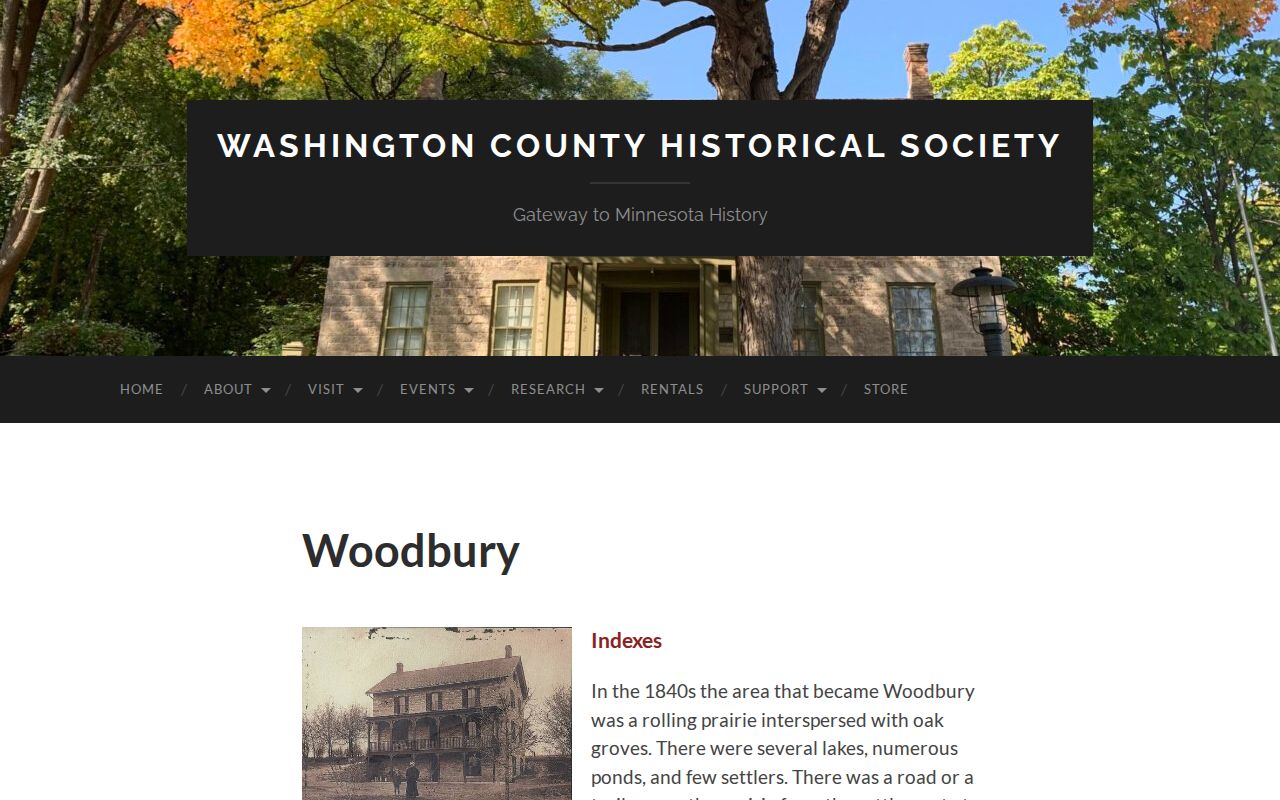
That historical layer can clarify place and community context, while a verified directory volume remains the source for a printed directory entry.